At the door: How Stillwater’s bouncers manage the night
By the time the woman from Kansas got to the front of the line at Tumbleweed Dancehall, Evan Zeleny knew what she was about to hand him.
She averted her eyes. She moved a little too casually for someone who was supposed to be old enough to be there. When she finally produced her ID, Zeleny flipped it in his hand and asked the question he always saves for Kansas.
“What’s the capital of Kansas?”
“Phoenix,” she said.
Wrong state, wrong answer, wrong bar.
In the past three years, Zeleny estimates he has taken more than 60 fake IDs. Most of the time, he said, he can tell before a wallet even opens what kind of card he is about to see.
On Stillwater’s The Strip and at Tumbleweed, bouncers and door staff are the first faces between a night out and a walk back to the car. They are the ones deciding who gets in, who gets tossed and which IDs never see the inside of a wallet again. For patrons, they are a blur of black shirts and flashlights. For the people doing the job, it is a strange mix of nightlife, security work and customer service that can swing from love to hate and back again in a single shift.
Zeleny did not become a bouncer because he was looking for a fight. He was looking for a job. He started at Tumbleweed after wandering in one college night and running into a manager at the front table who asked whether he had thought about being a bouncer. He told her he needed a job and had joked with friends about doing it. He applied and got hired.
For the next two years, he worked concerts and college nights at the country venue on the edge of town before spending time at bars along The Strip. Some nights meant crowds of about 2,500 people under Tumbleweed’s roof for a sold-out show. Others meant a door on Washington Street, a slower weeknight and a couple of regulars.
“It really does a lot mentally,” he said. “You’re just like, ‘I’m so tired of dealing with people that are just not being smart.’”
Down on The Strip, Kaitlyn Cupp came to the door at Willies Saloon from a different kind of security job. Before she started carding people at the bar, she worked for almost two years as a correctional officer at the prison in Cushing.
“I kind of quit that,” she said. “I already spent my time there. Might as well make money doing it.”
She spends her nights on a metal stool just inside Willies entrance, a small flashlight in her hand, IDs stacked beside her and a line of students stretching back to the sidewalk.
On weekends, the door stays open. A DJ thumps over the chatter as people flow in and out, stopping long enough to slide a card across the stand in front of Cupp. Every few minutes she leans into the beam of her flashlight, tracing the edges and pointing out the tiny tells that separate real from fake.
One especially bad card, she said, had likely been trimmed with nail clippers. The corners were too sharp, the edges too rough. Sellers, she said, will cut them that way, and under the light the mistakes show. When the holograms glowed in the wrong places or the plastic bled along the border, she slipped the ID into a growing stack of fakes on the shelf to her left. The arguments were brief. Regulars she recognized barely slowed down; she waved them through with a nod and turned back to the line.
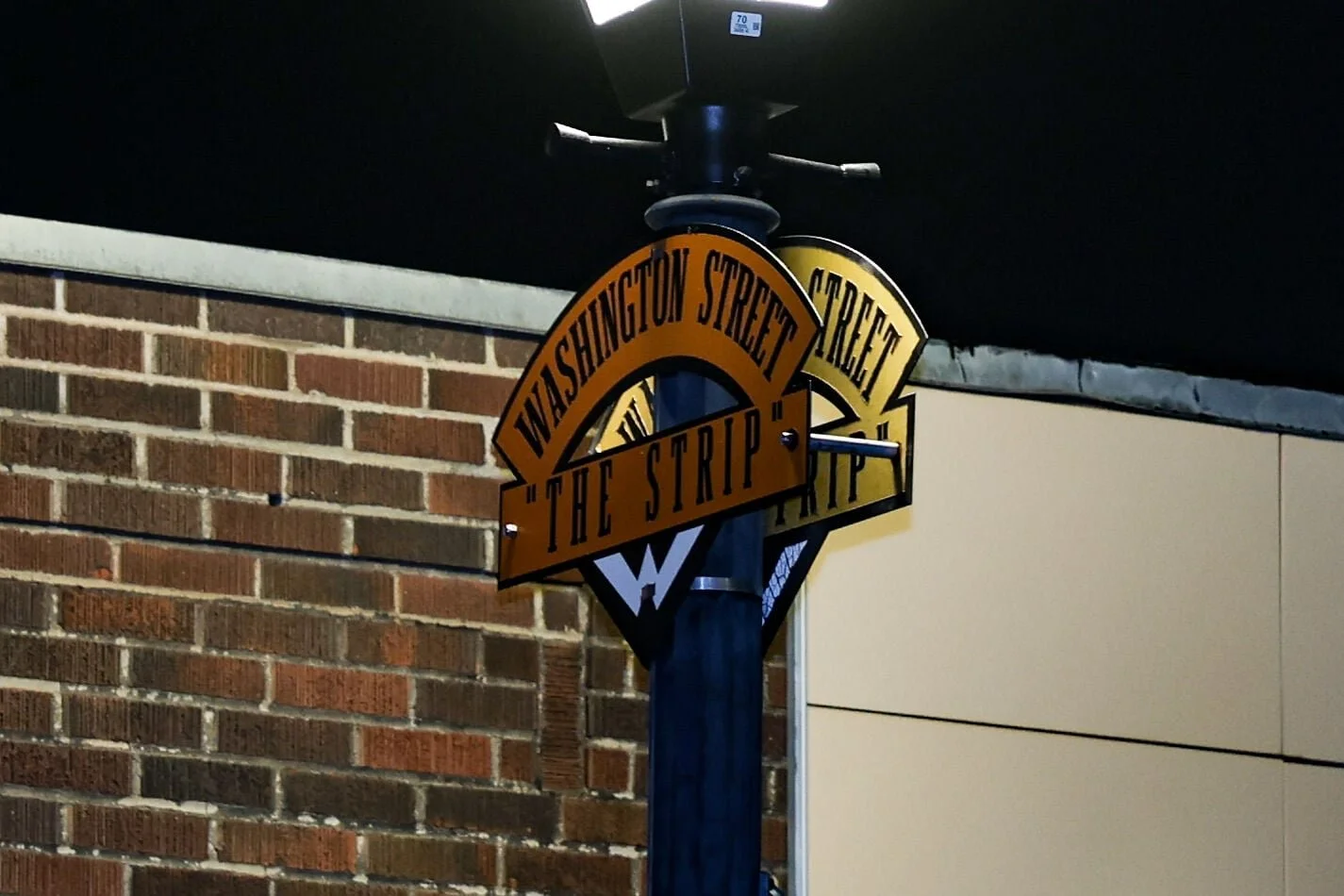
Photo by Bryson Thadhani, The O’Colly
“Honestly, it’s just really checking IDs, making sure that everybody’s safe,” she said.
A block down, at Copper Penny, Mason Belle-Isle sits at a host stand near the door. He has only been working The Strip since January, but he already talks about it like he has been there longer. His friends worked there, and he decided to join them, figuring it would be a pretty good job for a college town. Once he started, he realized he liked it and liked being part of The Strip.
He clocks in at 8 p.m. On weeknights he might spend long stretches talking with the bartender, stocking ice or cleaning up. On weekends, the room fills around midnight, usually for someone’s birthday.
“We’re kind of just the utility guys,” Belle-Isle said. “Sit at the stand the whole night, bar back if it’s a weekday, help close, clean up the whole bar, fix outside what needs to be fixed, just anything and everything.”
Ask any of the bouncers about the job, and fake IDs come up within minutes.
Kansas, Arkansas and Texas licenses are the most common out-of-state IDs Zeleny sees at Tumbleweed. He has developed a few tricks. He will ask for state capitals. He will ask for birthdays again halfway through a conversation. Sometimes he watches for body language.
“Most of the time, they won’t make eye contact with you, or they’ll be kind of nonchalant about it,” he said. “If you watch people enough, you observe what normal tendencies are and what’s not a normal way to walk up and be cordial about it.”
Over time, his gut has gotten sharper. On some nights, he said, he decided to take a patron’s ID before it was pulled out.
Cupp’s tools are more literal. She keeps her flashlight close and uses it to pick out small details. If she shines it on a real ID, the holograms glow in specific places. On some fakes, she said, the light bleeds through the outside edges instead, or the wrong parts of the design stand out. She has seen IDs so tampered with they almost fall apart.
Most people give up quickly when she calls a card fake. They try once to get it back; she tells them they cannot, and that is the end of it. When patrons insist their IDs are real, she reminds them they are free to call the police and have officers come look at them instead. Almost nobody takes her up on that.
Belle-Isle is building his mental library of IDs. One of his favorite fakes came on a Tuesday.
“It was a Texas fake,” he said. “This guy came in. It was a Tuesday night, which is funny in itself, like, why are you coming to the bar Tuesday night?”
Belle-Isle was sitting at the bar when the man handed over his license. He walked back to the stand, checked it under a blue light and watched the wrong parts of the card flare. He told the man it was fake and he had to leave. The man insisted it was the “realest ID he’s ever seen,” Belle-Isle said. Belle-Isle stood his ground.
Another man, he said, tried to take his ID back by force. As Belle-Isle held it, the man grabbed for it, asking for it back. Belle-Isle refused and told him he could leave the bar instead.
For all three, most fake-ID confrontations end there: a short conversation on the sidewalk, a confiscated card, a disappointed 19-year-old walking away.
Ask what the bouncers spend most of their time doing, and none of them start with fights. Instead, they talk about reading people, talking people down and deciding when someone has had enough.
Belle-Isle has not seen a fight inside his bar. He has kicked out people who got too drunk or too creepy, but he said most nights are straightforward.
“Everybody’s just drinking, having a good time,” he said. “It’s usually fine. I’ve never had a problem.”
Cupp has broken up two fights at Willies since August. She is more likely to be walking the floor checking on regulars, especially women, than dragging anyone out the door.
“We’re the first face you see,” she said. “We’re also the last face you see.”
Her approach when something starts to get heated is direct but quiet.
“Typically it is honestly just talking to people like they’re human, treating them like a human being rather than a piece of sh*t,” she said.
To her, the goal is to de-escalate a situation before it gets out of hand.
If she has decided someone has to go, she asks that person to step outside for a conversation instead of grabbing an arm in the middle of the dance floor.
“Nine times out of 10, every situation was handled by a conversation,” Zeleny said. “The number of times I actually had to physically remove someone, normally it’s because they are very belligerent or way too far gone, or they’ve already done something to somebody else and you’re trying to peel them away from each other.”
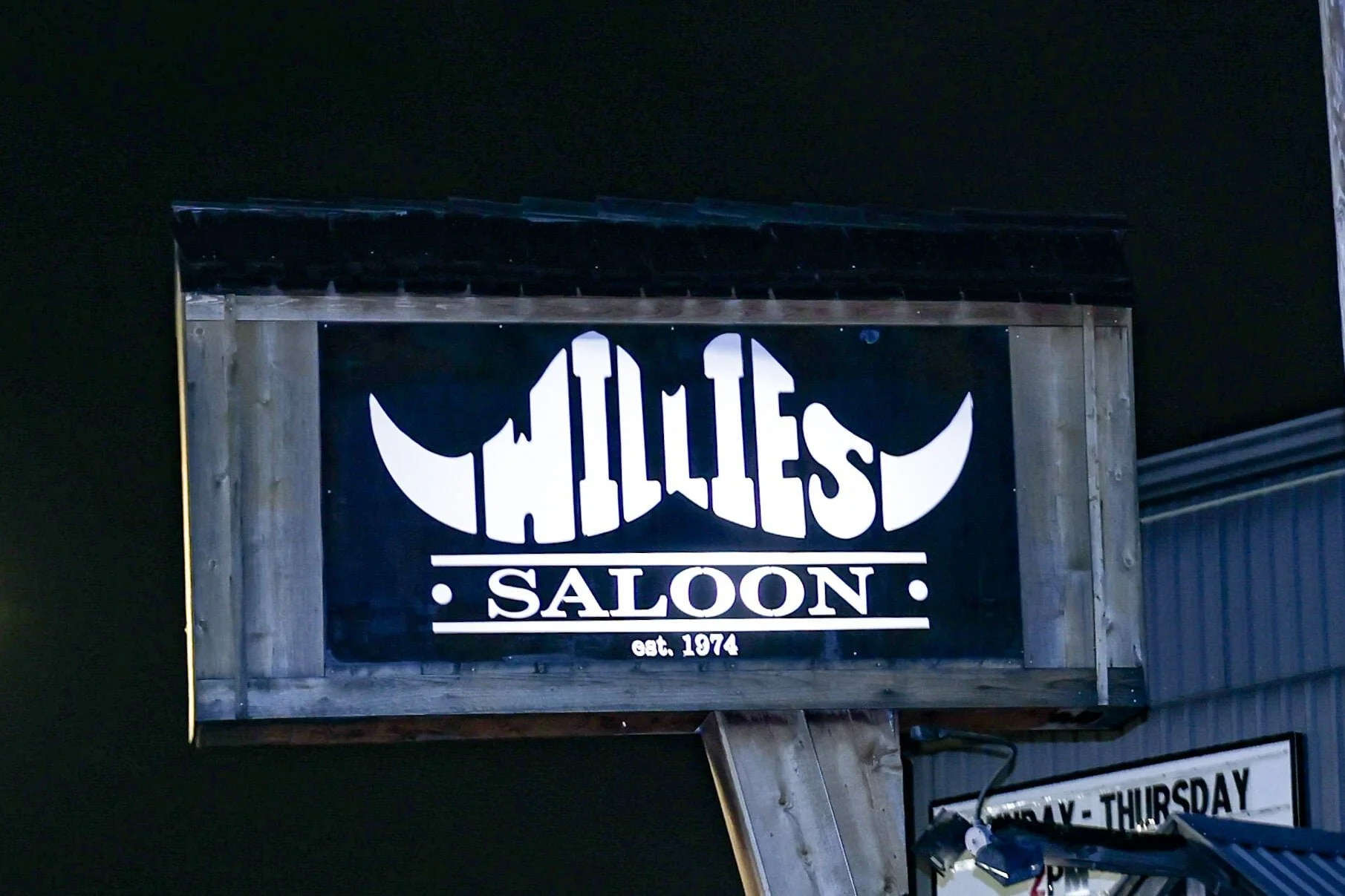
Photo by Bryson Thadhani, The O’Colly
In his first few months at Tumbleweed, Zeleny remembered one concert night when a man got punched on the floor and fell. It was not a full-blown brawl, only a disagreement that turned into a single punch, he said. Staff got the man who threw the punch out of the building first, then carried the other man outside. He eventually came around, but not before bleeding all over Zeleny’s shirt. After that, Zeleny started keeping an extra staff shirt and gloves close by.
He does not consider that night a loss of control. He thinks of it as a situation he and his coworkers did not see early enough to stop.
The biggest difference between a bouncer and a traditional security guard, Zeleny said, is the state of the people they are dealing with. He spends most of his nights talking to people under the influence of alcohol rather than sober employees or shoppers, and he has had to learn how those conversations work differently.
On a busy weekend, The Strip looks like a single, long hallway with different soundtracks. Students pour into Dirty Rooster to dance, then spill onto the sidewalk and cross into The Union or Willies. Some, like Oklahoma State student Mason Jay, make a point of visiting multiple bars before closing.
Jay said he goes out on The Strip once or twice a month. His group used to be “big Outlaw guys,” but with that bar closed, it drifts between Dirty Rooster and The Union. A normal night, he said, is to preparty somewhere, hit The Strip, hop between a couple of spots and head home.
He said Stillwater’s reputation for being strict on under-21 patrons is deserved.
“Stillwater’s always notoriously been pretty strict about, under 21,” Jay said. “I’ve never had a problem with any of them.”
He remembers one bouncer who returned a credit card he had left behind. Mostly, he said, they are just there. Asked whether he feels safer because of them, he said he is glad they are around when the bars fill.
Another patron, Jack Hinchliffe, said he rarely thinks about bouncers now that he is of age. An average night for him means barhopping two or three bars and hanging out with friends. He said he did not like the door staff as much when he was younger than 21. Now, he describes them as not that big of a deal and figures they are doing what they have to do so the bars do not get in trouble.
Hinchliffe can think of one bad story, from an outdoor concert at a different venue, where he heard about a bouncer hitting a man on the top of the head with a flashlight. His interactions have been uneventful.
What sticks with the people on the door are not just fake IDs or flashes of violence. It is the nights that feel as if they will never end.
For Zeleny, the hardest shifts are the ones where every small problem seems to show up at once. He has worked concerts where thousands of people came and there was not an issue, and others where it felt as if the crowd brought all of its problems inside. On those nights, closing time does not necessarily mean sleep. Sometimes, after the last patron leaves and the last trash bag hits the Dumpster, staff end up at IHOP or Whataburger, sitting under fluorescent lights and talking through what just happened.
Belle-Isle’s most memorable shift so far did not involve a fight or a fake. It involved snow. He was scheduled to work Jan. 31, and Stillwater woke up under several inches of it and was convinced nobody would come in. Instead, the bar was crowded. Students who lived at nearby apartments walked over rather than drive. People went outside to make snow angels on the patio and then came back in. For once, nobody wanted to leave.
For Cupp, the job’s biggest surprise has been how much of it feels like the prison world she left and how much of it does not. The awareness of danger carried over. The music, the regulars and the women who tell her they feel safer when she is working did not. She walks The Strip knowing that on most nights, nothing terrible will happen, and that it always could.
“There’s always probability of danger,” she said. “But it could be any kind of place.”
Most nights, it is not. Most nights, she checks IDs, makes small talk and watches groups stream in and out under the neon Willies sign.
“We’re the first face you see,” she said again. “We’re the last face you see. The women know that I will make sure that they’re safe. The guys, too.”
After the music stops and the lights come up, the people at the door step back into the cold, pockets full of confiscated plastic, ready to do it again the next night.
